
Symposium on Plasma And Nuclear Systems
|
Organized by
|
Time: August 20, 2026 Ontario Tech University |
|
Founders |
Sponsors |

General Chair: Dr. Hossam A.Gabbar, Professor, Ontario Tech University, Canada
General Co-chair: Dr. Blair P. Bromley (Nuclear Engineering Scientist), Division Co-Chair – Canadian Nuclear Society – Fusion Energy and Accelerator Science and Technology Division (CNS-FEASTD), Canada
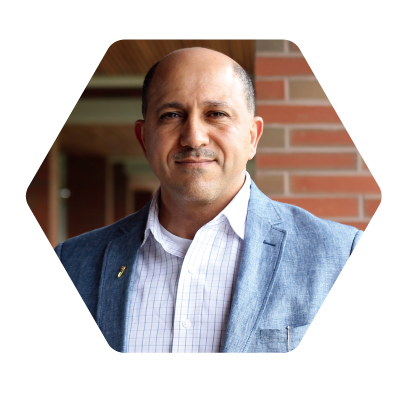
Message from SPANS Chair, Dr. Hossam A.Gabbar, Ontario Tech University, Canada
Professor in the Faculty of Energy Systems and Nuclear Science, and cross appointed in the Faculty of Engineering and Applied Science, UOIT welcomes all attendees at SPANS.
IEEE NPSS (Nuclear and Plasma Sciences Society), Toronto, has been active in organizing workshops in plasma and nuclear systems since its establishment.
The recent workshop was on Real Time Measurement, Instrumentation, and Control (RTMIC). This workshop has been extended with the collaboration with CNS-Fusion Energy and Accelerator Science and Technology Division (CNS-FEASTD), and the Canadian Association of Physicists (CAP) – Plasma Physics Division to organize SPANS (Symposium on Plasma and Nuclear Systems).
SPANS provides a unique opportunity for fruitful discussions and collaboration between industries and academia. In addition, it provides great opportunities for students to present their work and have closer discussions with researchers, scientists, and professionals from industries to add great values to their skills and awareness of real industrial projects.
This symposium is providing forum for researchers from academia and industry to
present and discuss latest research innovations in nuclear and plasma systems.
SPANS will provide attendees with state-of-the-art research and technologies and
engage in active discussions with industry. Also it will provide industry with
opportunities to promote their products and business cases. Attendees from
regulators and standards will engage in fruitful discussions on how R&D is
linked with regulations and standards.
Previous SPANS:
2025 | 2024 | 2023 | 2022 | 2021 | 2020 | 2019 | 2018 |
2017 | 2016 |
2015 | 2014
Spans Keynote Speakers
Prof. Dr. Hossam A. Gabbar, Ontario Tech University, Canada
Fellow IET (FIET), Distinguished Lecturer IEEE NPSS, Director of Smart Energy Systems Lab
Dr. Gabbar is a full Professor in the Department of Energy and Nuclear Engineering, the Faculty of Engineering and Applied Science, at Ontario Tech University (UOIT), where he has established the Energy Safety and Control Lab (ESCL), Smart Energy Systems Lab, and Advanced Plasma Engineering Lab. He is the recipient of the Senior Research Excellence Aware for 2016, UOIT. He is recognized among the top 2% of worldwide scientists with high citation in the area of energy. He Fellow IET (FIET) and Distinguished Lecturer – IEEE NPSS on Nuclear-Renewable Hybrid Energy Systems and Plasma-based Waste-to-Energy. He is leading national and international research in the areas of smart energy grids, energy safety and control systems, and waste-to-energy using advanced plasma technologies. Dr. Gabbar obtained his B.Sc. degree in 1988 with first class of honor from the Faculty of Engineering, Alexandria University (Egypt). In 2001, he obtained his Ph.D. degree from Okayama University (Japan). From 2001 till 2004, he joined Tokyo Institute of Technology (Japan), as a research associate. From 2004 till 2008, he joined Okayama University (Japan) as an Associate Professor, in the Division of Industrial Innovation Sciences. From 2007 till 2008, he was a Visiting Professor at the University of Toronto. He also worked as process control, safety, and automation specialist in energy and oil & gas industries. Dr. Gabbar has more than 290 publications, including patents, books / chapters, journal and conference papers.
Dr. Hossam Gaber has been collaborating with Japan and Indonesia to promote nuclear-renewable hybrid energy systems, where he was invited to the panel discussions in Indonesia as part of IAEA and was the representative of Canada in IAEA to develop the roadmap of nuclear-renewable hybrid energy system deployments with different energy scenarios based on regional resources and requirements. Dr. Gaber developed novel integrated hybrid energy system simulator to synthesize and optimize different nuclear-renewable scenarios and evaluate different nuclear power plant and SMR technologies based on energy load profiles and local resources. Dr. Gaber prepared nuclear deployment strategies and training programs, and explored in different countries including Canada, USA, Indonesia, UK, Norway, South Africa, Brazil, Egypt, UAE, and Hungary. Dr. Gaber has presented his scholarly research in Wisconsin, Budapest, Tokyo, Cairo, Jakarta, and other cities around the world. Dr. Gaber is also leading national research related to radioactive waste for SMR deployment as part of University Network of Nuclear Engineering (UNENE), Canadian National Laboratory (CNL), Ontario Power Generation (OPG), and NSERC. His research led to patents and products in the market with industrial applications and projects.
Speech Title: Advances in Plasma-Based Radioactive Waste Treatment
This talk presents advanced approaches for plasma-based radioactive waste treatment. Different designs of plasma torches and generation systems are discussed, including RF, DC, and MW plasma, are analysed and compared for waste-to-energy applications. Novel plasma torch design is proposed to support different scales and types of radioactive waste treatment. Process engineering techniques for gasification and pyrolysis process are integrated with the radioactive waste treatment process, which are illustrated with waste characterization. The proposed approaches showed reduced radioactive treatment costs, risks, volumes, in addition to reduced greenhouse gas emissions and improved lifecycle performance. Plasma systems are utilized for nuclear waste treatment for low, intermediate, and high radioactive waste. Process design is discussed for plasma torch that can reduce the volume of radioactive waste. Potential approaches are explored for mass separation that could be utilized for high-level radioactive waste. Simulation methods and experimental setups demonstrate lab-scale process technologies for plasma-based radioactive waste treatment.
Prof. Luc Stafford, Université de Montréal, Canada
Luc Stafford is a Full Professor in the Département de physique at the Université de Montréal, where he holds a Canada Research Chair in the Physics and Diagnostics of Low-Temperature Plasmas and Their Applications to Complex Materials Processing.
His research is driven by the fundamental need to deepen our understanding of energy transfer mechanisms in plasmas exhibiting strong non-equilibrium between electronic, vibrational, rotational, and translational states. By elucidating how energy flows and redistributes across these degrees of freedom, his work aims to enable more selective, energy-efficient, and sustainable transformations of matter across different phases.
Professor Stafford has made major contributions to the development and implementation of advanced optical diagnostic techniques coupled with state-of-the-art collisional-radiative modeling. These tools have provided new insights into electron heating dynamics, energy dissipation pathways, and reactive species formation in both low-pressure and atmospheric-pressure plasmas.
Beyond fundamental plasma physics, his research has led to innovative applications in advanced materials processing. These include the value maximization of materials derived from woody biomass, the plasma functionalization of monolayer graphene films, the plasma deposition of (multi)functional thin films for aeronautics and aerospace, and the development of water-soluble, bio-based electrodes for stable aqueous lithium-ion batteries. Through this interdisciplinary work, he bridges fundamental plasma science with sustainable surface engineering and advanced materials technologies.
Speech Title: Hyperspectral imaging of a atmospheric pressure plasma jets in interaction with surfaces
A detailed characterization of electron parameters, particularly electron temperature and electron number density, is essential to understand the physics and chemistry governing non-equilibrium reactive plasmas and their interactions with surfaces during materials processing. Although optical emission spectroscopy is widely used as a non-intrusive diagnostic tool, obtaining spatially resolved plasma properties at surface vicinities remains challenging. Conventional line-of-sight measurements lack two-dimensional (2D) resolution, while filter-based imaging provides limited spectral information. Conversely, full spectral acquisition across a 2D region typically requires time-consuming point-by-point scanning, hindering real-time diagnostics.
In recent years, these limitations were overcomed by implementing hyperspectral imaging in non-equilibrium plasma processing of materials. The tool used in our lab is based on a tunable Bragg-grating imager coupled to a scientific complementary metal–oxide–semiconductor camera. The working principle of the system and the associated post-processing procedures will be exposed. Spatial–spectral datasets will be analyzed using a collisional–radiative modelling in the specific case of a microwave argon plasma jet open to ambient air. This approach will be used to extract space-resolved 2D mappings of key plasma parameters. with exceptionally high spatial resolution and within a reasonable acquisition time, of electron temperature, electron number density, argon excitation temperature, argon molecular ion number density, argon and oxygen populations, Ar metastable density, and electric field intensity.
It will be highlighted that Bragg-grating-based hyperspectral imaging combined with advanced modelling of optical emission spectroscopy data provides an advanced and efficient diagnostic framework for comprehensive, spatially resolved analysis of microwave plasma jets used in a wide range of applications.
Prof. Chijin Xiao, University of Saskatchewan, Canada
Chijin Xiao is a professor in the Department of Physics and Engineering Physics, University of Saskatchewan. He obtained his B.Sc. and M.Sc. degrees from the University of Science and Technology of China, and the Ph.D. degree from the Ruhr-University Bochum, Germany. He has been working on magnetically confined plasmas for over four decades. His research topics include plasma confinement studies on many types of devices (including the STOR-M tokamak at the University of Saskatchewan), compact torus (CT) injection experiments, and other aspects of plasma physics and engineering. He is currently one of the editors of the journal Radiation Effects and Defects in Solids -Incorporating Plasma Science and Plasma Technology. He is serving on the advisory board of Fusion Energy Council of Canada.
Speech Title: Fusion Energy R&D-Progress, Challenges, and Outlook
Fusion energy has been considered the ultimate solution to energy demand due to its intrinsic safety, low carbon footprint, and abundant fuel resources. Over the last seven decades, scientists and engineers have tirelessly worked on fusion energy development, and significant progress has been made. Laser fusion has achieved scientific fusion energy gain factor of Q=4 and quasi steady-state tokamak operation over 1000 seconds has been demonstrated in superconducting tokamaks. The accumulated private investment in fusion energy has hit the $10B mark. This talk will discuss the status, main challenges, and outlook of fusion energy development.
Prof. LODOVICO RATTI, University of Pavia, Italy
LODOVICO RATTI (M’ 2000, SM’2013) is full professor of electronics with the University of Pavia, Department of Electrical, Computer and Biomedical Engineering, Italy. His main expertise is in the design of front-end electronics for highly segmented radiation detectors, photodetectors (SPADs) and monolithic sensors, in particular based on CMOS processes. His work is also concerned with the study of ionization and substrate damage caused by radiation, as well as the characterization of noise, in microelectronic devices and circuits. The target applications are in the area of high energy physics, astrophysics and photon science experiments. Lodovico Ratti is secretary of the Radiation Instrumentation Steering Committee (RISC) of the Nuclear and Plasma Sciences Society (NPSS) and Chair of the Nuclear and Plasma Sciences (NPS) Italy Chapter. He is a technology research fellow with the Italian Institute for Nuclear Physics (INFN). He is author or co-author of about 350, including papers published in peer-reviewed journals or conference proceedings, works presented at international conferences and book chapters, and editor for IEEE Transactions on Nuclear Science, Frontiers in Physics and MDPI Electronics.
Speech Title: Lives on the edge: the risky daily existence of radiation instrumentation
Electronic circuits and systems are employed in a number of different fields where some degree of radiation tolerance is required. When operated in such environments, they may be directly struck by particles or highly energetic photons, with a subsequent alteration of their electrical properties. The presentation provides an overview of the key challenges associated with radiation damage study in electronic circuits, intertwined with the research conducted in this field by the Electronic Instrumentation Laboratory at the University of Pavia. Tools for radiation tolerance assessment are briefly reviewed and possible radiation hardening measures are outlined. Some emphasis is placed on how radiation tolerance is affected by the evolution of microelectronic technologies and by the growing hostility of the radiation environments.
SEGE 2025 Presentation on SPANS 2025

Perspectives of Small Modular Advanced Reactor Used Fuel Management in Canada
Best Student Presentation
Integrated Optimization Framework for Plasma-based Radioactive Waste Treatment Process
Authors: Roman Stetsiuk, Mustafa Mansour, Hossam A.Gabbar, Ontario Tech University, Canada
Direct Plasma Potential Measurements in the STOR-M Tokamak Using a Ball-Pen Probe
Authors: J. Talbot-Pâquet (1), C. Xiao (2), J. Morelli (1), 1: Department of Physics, Engineering Physics & Astronomy, Queen’s University
Demonstration of Nuclear-Renewable Hybrid Energy Systems for Regional Planning and Deployments
Authors: Jennifer Jaen, Emmanuel Ita, Nathaniel Kebere, Hossam A.Gabbar
Topics
• Plasma Devices and Applications
• Plasma Experiments, Diagnostics and Control
• Plasma Simulation and Modeling
• Nuclear Fusion Systems
• Small Modular Reactor (SMR) Systems
• Generation-IV Nuclear Technologies
• Advanced Reactor Systems
• Nuclear Power Plant(NPP) Safety Systems
• Nuclear Power Plant(NPP) Control Systems
• Nuclear Power Plant(NPP) Monitoring and Measurement Systems
Registration Fees
The SPANS registration for attendees should be under the category:
$50 for regular authors (and attendees)
Space is Limited (60 to 100 max)
Please send registration information to: hossam.gaber@ontariotechu.ca
Online payment: For SEGE SPANS Registration, choose "SPANS Only: 30 Dollars"